Released on August 26, 1997, John Frusciante’s solo album, Smile From the Streets You Hold, contains two songs featuring River: Height Down (originally titled Soul Removal), and Well, I’ve Been (originally titled Bought Her Soul). Both songs were supposed to be released on Frusciante’s first solo album, Niandra LaDes and Usually Just a T-Shirt (released in 1994), but were pulled by request of River’s family after his death.
Written and sung by River himself, the lyrics for Soul Removal provide a chilling glimpse into his prior knowledge of how he would ultimately die. Although no official version of the lyrics exists, the version posted below paints a close enough picture.
Soul Removal
Two, three, four…
I’ll send flowers again for her
Blossom castle scents
has her guest
a gift described,
disguised as my rival.
Lovely life full regret
psychos did you hear
dirty boys only
see that Rolling Throne story unfold
yeah or how it might be
I can sure see how they’ll take
gather round the fireplace
feelin’ freaky son.
Murderless helping hands
in a soul removal.
Leader says century now
Kingship gives it to her for me.
Feather ascends
Failing light nailed its spike
through the wall
to realize that they’ll come after
what you’ve planned for
I’m pleading foregoing tomorrow
to do it right.
Although the lyrics read like a riddle, key phrases such as “murderless helping hands in a soul removal” and “I can sure see how they’ll take, gather round the fireplace, feelin’ freaky son” are pretty straightforward. The murderless helping hands are, most likely, a reference to the golden gods. The mention of “the fireplace” and “feelin freaky son” refers to being passed through the fire.
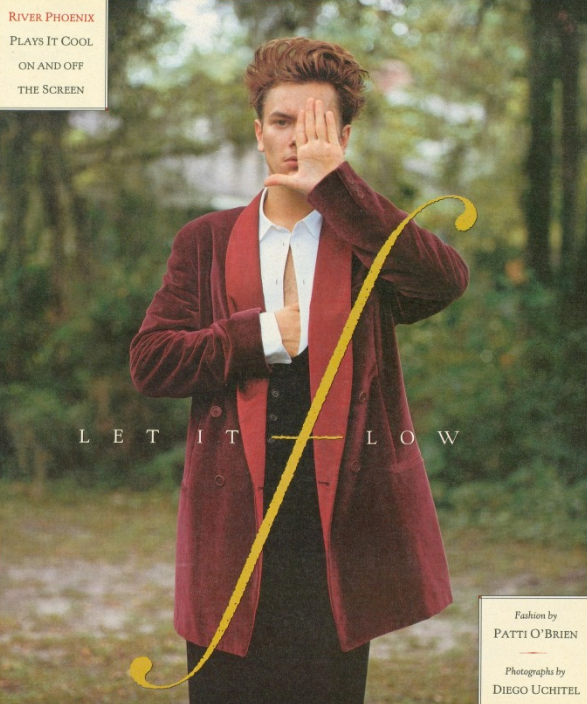
The song begins with the line, “I’ll send flowers again for her,” the flowers being the gift or the fruition of the word, and “her” being a reference to the dying god. River also sings the line “dirty boys only” which could be a reference to seeing your own shadow like the figure on the tree in Stand by Me in blackface makeup. The next line, “see that Rolling Throne story unfold” seems to confirm this theory. “Rolling Throne” being a play on words for the Rolling Stone photo shoot featuring the “X” across his abdomen with the words “Let it flow.” It was released on October 31, 1991. Rolling stone is also a reference to the golden gods.
The last part of the song is sung by John Frusciante. It begins with the line “feather ascends” which is symbolic of a soul rising from the body. The last three lines refer to “light” as a type of spy, again, a reference to the rolling stones or the dying/golden gods. “They’ll come after what you’ve planned for” indicates that River’s plan would go awry. The last line, “I’m pleading foregoing tomorrow to do it right” seems to imply that Frusciante was pleading with River not to go to the Viper Room. While my analysis of these lyrics may leave room for error, the original title, Soul Removal, is pretty straightforward.
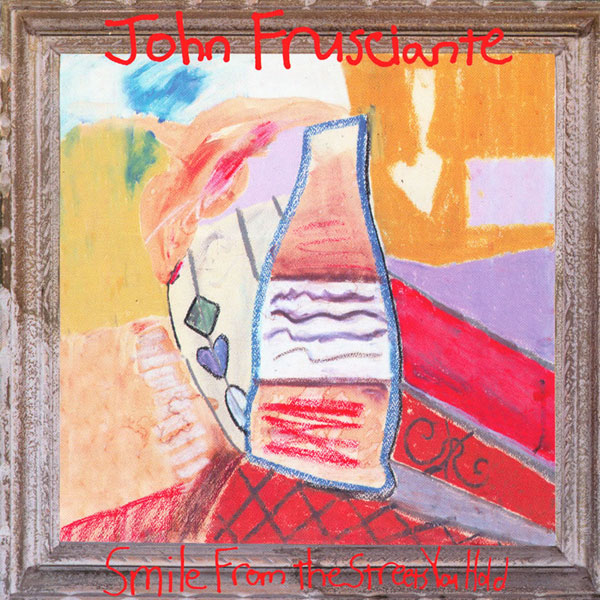
Designed by John Frusciante, the album cover appears to depict the scene of the crime. The bottle in the foreground outlined in blue symbolizes the alchemical process that killed River. Like cracking open a bottle of soda, the pressure is released and the gas bubbles rise to the surface, or in River’s case, the brain. Notice the snake emerging from the top of the bottle representing something known as the kundalini flame, or the coiled serpent. The layers of red and purple symbolize the highly acidic and highly conductive molten brew of dissolved minerals and gases. The white area next to the bottle can be thought of as River, the lines perhaps representing different brain waves. It’s possible that River believed he could alter his brain waves or frequencies and, therefore, withstand the flood.
We can also view these lines as a music staff with five lines and four spaces representing a different musical pitch. The snake emerging from the bottle bites “River,” and below that, we see three symbols or three notes – a diamond, a heart, and an oval – the threefold cord or the Devil’s chord, the tritone. So, here we have the music that literally killed River.
The bottle sits on a red surface covered with “X’s,” once again, symbolizing DNA and the word in River’s blood. The symbol next to the bottle can be thought of as an infinity symbol with wings, i.e, River’s transformation into a golden god. In the background, we see what looks to be a soul connected to a heart which would also support this theory. The building is colored gold representing the realm of the golden gods with the mirror also symbolizing the spirit realm.
A full moon with blue eyes looks down upon the scene with its left eye eclipsed by the sun. As the moon reflects light from the sun, so River’s life and death reflected the light of the golden gods. And like the full moon that illuminated the sky that night, River, too, came around full circle.
What is the kundalini fire, exactly?
Sometimes called St. Elmo’s Fire or the Eternal Flame, the kundalini fire is described as a primal or cosmic energy lying coiled at the base of the spine. In Hinduism, it’s described as “The Great Divine Mother.” In New Age teachings, it’s represented as either a goddess or sleeping serpent waiting to be awakened in order to obtain spiritual enlightenment. It has also been called an unconscious, instinctive or libidinal force that, when awakened, travels up the spinal column to the top of the head.
In his book, The Secret Teachings of all Ages, Manly P. Hall refers to it as a “Spirit Fire” that moves through the spinal column and is, essentially, the Lost Key of Masonry:
“The exact science of human regeneration is the Lost Key of Masonry, for when the Spirit Fire is lifted up through the thirty-three degrees, or segments of the spinal column, and enters into the domed chamber of the human skull, it finally passes into the pituitary body (Isis), where it invokes Ra (the pineal gland) and demands the Sacred Name.”
(Manly P. Hall, The Secret Teachings of all Ages)
This cosmic energy coiled at the base of the spine is our own human waste recycled and transformed into new energy, thus, human regeneration or rebirth. Think of the large and small intestines coiled up around the base of the spine. The small intestine is where most chemical digestion takes place, and the large intestine, or colon, is the last part of the digestive system. It extracts water and salt from solid wastes before they are eliminated from the body. The colon is also the site where gut flora (microorganisms) ferment unabsorbed materials. Fermentation is a process that converts sugar to acids, gases, or alcohol (like wine).

Instead of the body disposing of these wastes, the new book of DNA harvests and recycles it into energy. Think of Macbeth and the three witches gathered around the cauldron chanting “double, double, toil and trouble, fire burn and cauldron bubble” – the stomach is literally the witch’s cauldron. The Emerald Tablet (considered the founding book on alchemy) describes this process as “The Wind Carried It in its Belly.” Wind, as it were, is the movement of gases, air and charged particles, thus the concept of “passing wind.” Like the Rolling Stone picture of River with an “X” across his stomach, the witch’s brew turned his stomach into a ticking time bomb.
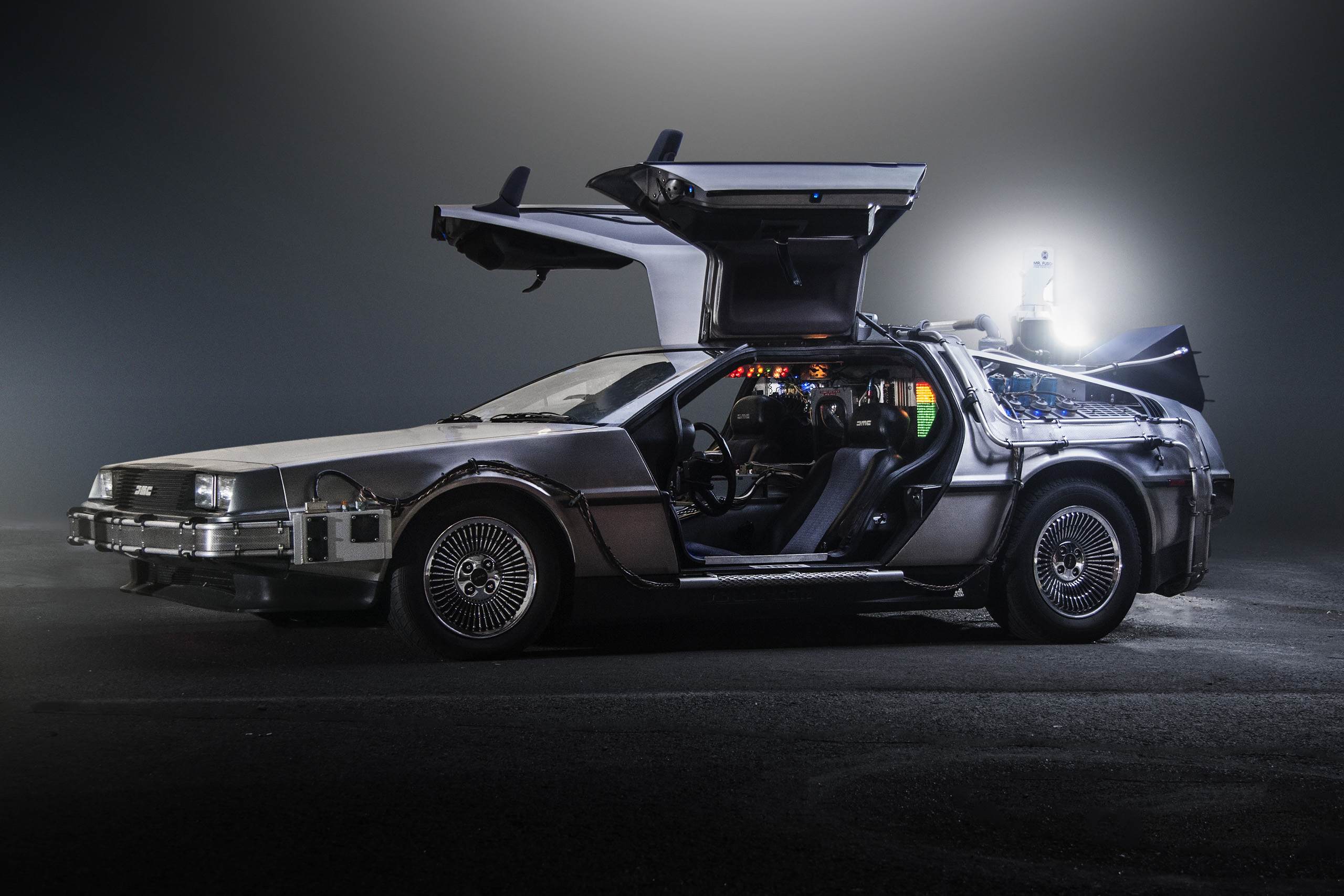
Like stirring the cauldron, the wind or pure energy forms a vortex that travels up the spinal column and into the brain. The stomach literally gives birth to the kundalini flame. Using Back to the Future as an example, the DeLorean uses garbage as fuel and features a generator referred to as Mr. Fusion in the film. Think of the car as the human body and Mr. Fusion as the golden god. Indeed, the car actually has “wings” much like the setting sun in the image below.
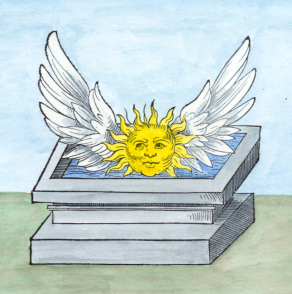
The philosophers are the golden gods, and the mercury is the garbage (sodium phosphates and metallic minerals) generated into fuel from our bodies. Like Michael Stipe shoulder deep in the ocean, this woodcutting symbolizes being passed through the fire to wipe the slate clean. The “Sol” or the light, or the word in the flesh is wiped clean only to begin the cycle again.
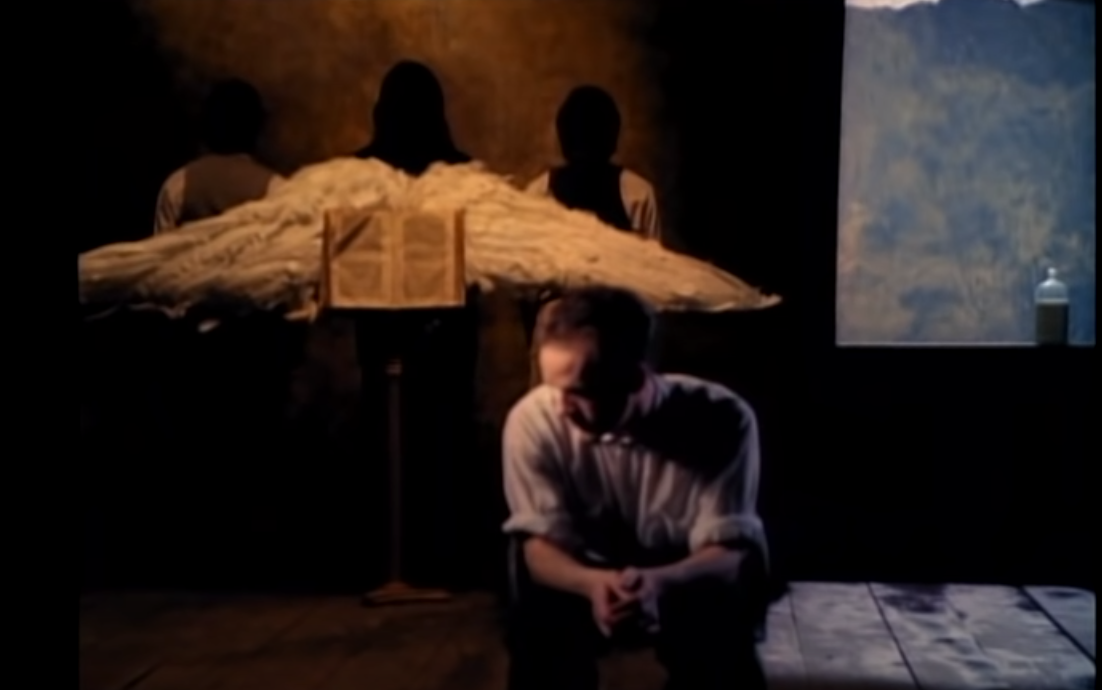
We saw this same concept at the end of R.E.M.’s video for Losing My Religion. The newly filled bottle on the windowsill represents the human body much like the bottle on Frusciante’s album cover for Smile From the Streets You Hold. The third track from that album, Life’s a Bath, also describes this process with lyrics that simply state:
“One year went by baby, does she want to be happy with you? Life’s a bath, sex is water. Life’s a bath, sex is water.”
(John Frusciante, Life’s a Bath)
Frusciante was said to have played this song at the Viper Room the night River died.
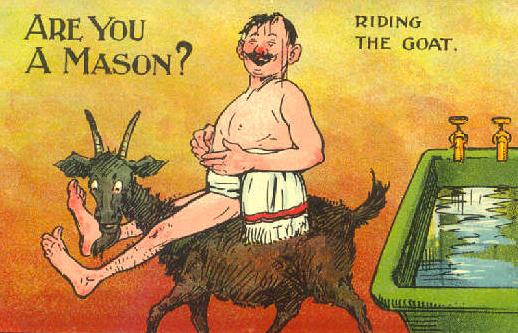
We see this concept displayed in Masonry as well. The picture featured above is a vintage Masonic postcard depicting a man, who has just had a bath, riding a goat. Notice the bathtub is green and the background is yellow, orange, and red. The goat represents the mark of the beast. After his bath he is no longer a “dirty boy,” and so the cycle starts over again.
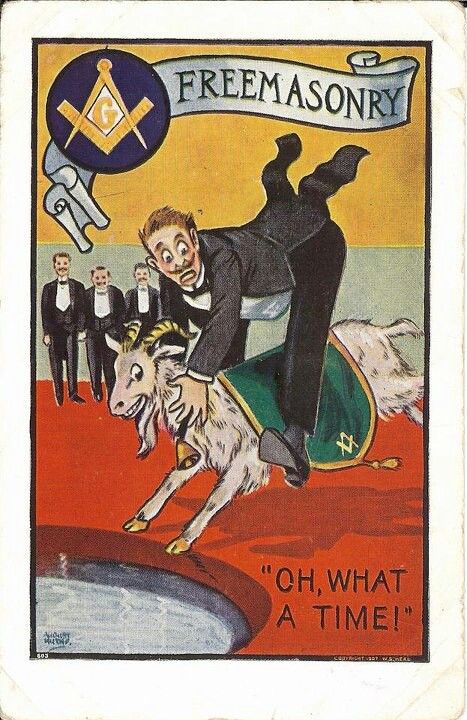
Another vintage Masonic postcard featuring a man riding a goat into a pool of water. Notice, again, the color scheme: a black and white tuxedo (the word), the green sash on the goat, the red floor, and the gold and silver background. Notice also the three masons standing against the wall (the threefold cord). The bottom of the postcard reads, “Oh, what a time!” signifying the time cycle to which initiates are subjected.
Whether it’s called the kundalini experience, the masonic bath, or the biblical terminology of being passed through the fire, the concepts behind this occult practice remain the same. The physical results spark a transformation or regeneration of the digestive system as well as the initiate’s DNA. Indeed, one commonly reports the kundalini experience to be a feeling of electric current running along the spine. Numerous accounts describe unwanted side effects commonly referred to as the Kundalini Syndrome. Symptoms include:
- Involuntary jerks, shaking, itching & tingling
- Feelings of electricity circulating thru the body
- Intense heat (sweating) or cold
- Difficulty breathing and shortness of breath
- Headache, migraine, or pressure inside the skull
- Emotional numbness
- Sensitivity to light, sound, and touch. Visions.
- Mood swings with periods of depression or mania
- Increased blood pressure and irregular heartbeat
- Trance-like and altered states of consciousness
- Loss of appetite or overeating
- Pains in areas of body, especially back and neck
- Heightened sexual desire and sometimes orgasm
- Disrupted sleep pattern (insomnia and oversleeping)
River’s fall outside of the Viper Room was not a result of a massive drug overdose, but rather, a result of the kundalini syndrome.
Bought Her Soul / Well, I’ve Been
Frusciante’s album, Smile From the Streets You Hold, also features a track titled, Well, I’ve Been (previously titled Bought Her Soul) in which River, again, sheds light on his life and death. As the story goes, Frusciante told River to just speak into a microphone and then he would reverse the vocals on the track. The original footage, that is, the non-backwards version is easy to dismiss as drug-fueled gibberish, but certain words and phrases suggest otherwise.
River begins with the phrase “I went into the Noah’s Ark” which appears to be a reference to, not only the flood (the bath), but also being born again as a golden god. Like the use of “the raft” in his song Dog god, Noah’s Ark could be a reference to the astral plane and the mother ship. Rhyming with ark, he also makes reference to a fart, which, although humorous, foreshadows the coming flood brewing in his stomach that eventually killed him.
He then croons into the microphone “I cry for your brother who sits on a stove.” Like the stove featured in R.E.M.’s video for Find the River, the stove represents being passed through the fire. After that, he says, “f*ck you anyway, you suck.” It’s almost as if he’s mocking the dying god in the first part, and the second part, “you suck” is a play on words. The dying god, like a vampire, sucks.
We also hear the phrase, “I wish I could get into your brain…nerves” which is another reference to the kundalini flame (which affects the central nervous system via the brain) and the threefold cord, i.e., the godhead.
In a system ruled by occult numerology, River’s use of the phrase “I have no numbers to guide me” is also significant. It is another implication that he had reached the end of the road. Lastly, we hear a reference to the children’s book The Little Engine That Could when he says, “I’m going a little faster, like a train up the hill, I think I can, I think I can, I can, I can, I lied. I try, I can, I can, I run…” The vocals then come to an abrupt stop. On the album version, the song ends with Frusciante singing, “Your shabby clothes you can’t be sold or bought, your gold.”
The Empyrean
John Frusciante released his eighth solo album, The Empyrean, in 2009. In ancient cosmologies, the Empyrean Heaven, or simply the Empyrean, was the place in the highest heaven which was supposed to be occupied by the element of fire.
One song in particular off the album titled, Dark/Light, appears to be about his deceased friend and a plan that went horribly wrong. The line “now what do we get for trying to follow to a ‘T’ all the instructions you gave to me” seems to be a direct reference to River’s friends and that last night at the Viper Room.
Dark/Light
Remember all you’ve forgotten
I can’t put those thoughts away
Anything I’ve thought’s
in my head to stay
Now what do we get
for trying to follow to a T
All the instructions you gave to me
Did you ever notice
That it’s for you that I’ve lived my life
Every time I had fun
you were on my mind
I’ve lost my perspective
I’ve gone off the wall
Really not sure if
I’m needed here at all
Hey
This is my last shot
I’ll always be less than
my other selves
So I feel like I’m competing
with someone else
Who I could never beat
in a million years
I was made to think
that we would wind up round here
Will we ever get together in a song
Will you ever tell everybody
about right and wrong
Will you let everyone in on
the meaning of life and death
Do you need me or are you
waiting for my last breath
Listen
The title of the song alone tells the story of what actually happened to River – Dark/light, black and white, i.e., the word. Towards the end of the song, Frusciante sings, “I was made to think that we would wind up round here” an intriguing line that seems to imply another prophecy. The lyric is followed up with “will we ever get together in a song, will you ever tell everybody about right and wrong, will you let everyone in on the meaning of life and death?” Here, we have an indication that there was another plan in the works.
We see this concept again in another track off that album, titled, Heaven. The first part of the song deals with River as a dying/golden god, but it’s the last part that seems to imply John’s expectation of a future prophecy.
Heaven

Well I spent the night in heaven
I wanted to figure it out for myself
I spin around the fortress
You never know the currency
that we all run on
We run on
We run on
You once told me
You keep a billion frequencies
on your person
End the night with channel four
You don't see me looking
you up when I'm here
We live fast cuz time won't last
See me freezing like the bum I am
From where you start there's endless
information drilled into your eyes
Well, I don't need protection
One life begins, another dies
Bad timing
I won't last, Man, that's a fact
It is a feeling that will never pass
And you know you
could be taking us far
When I speak to you again
through the stages of pleasure
Well, I don't have my own face
So c'mon and be replaced
There's a future that's calling
But I don't see it coming
No, I don't have my own face
So c'mon and be replaced
There's a future that's calling
But I don't see it coming
No, I don't see it coming
No, I don't see it coming
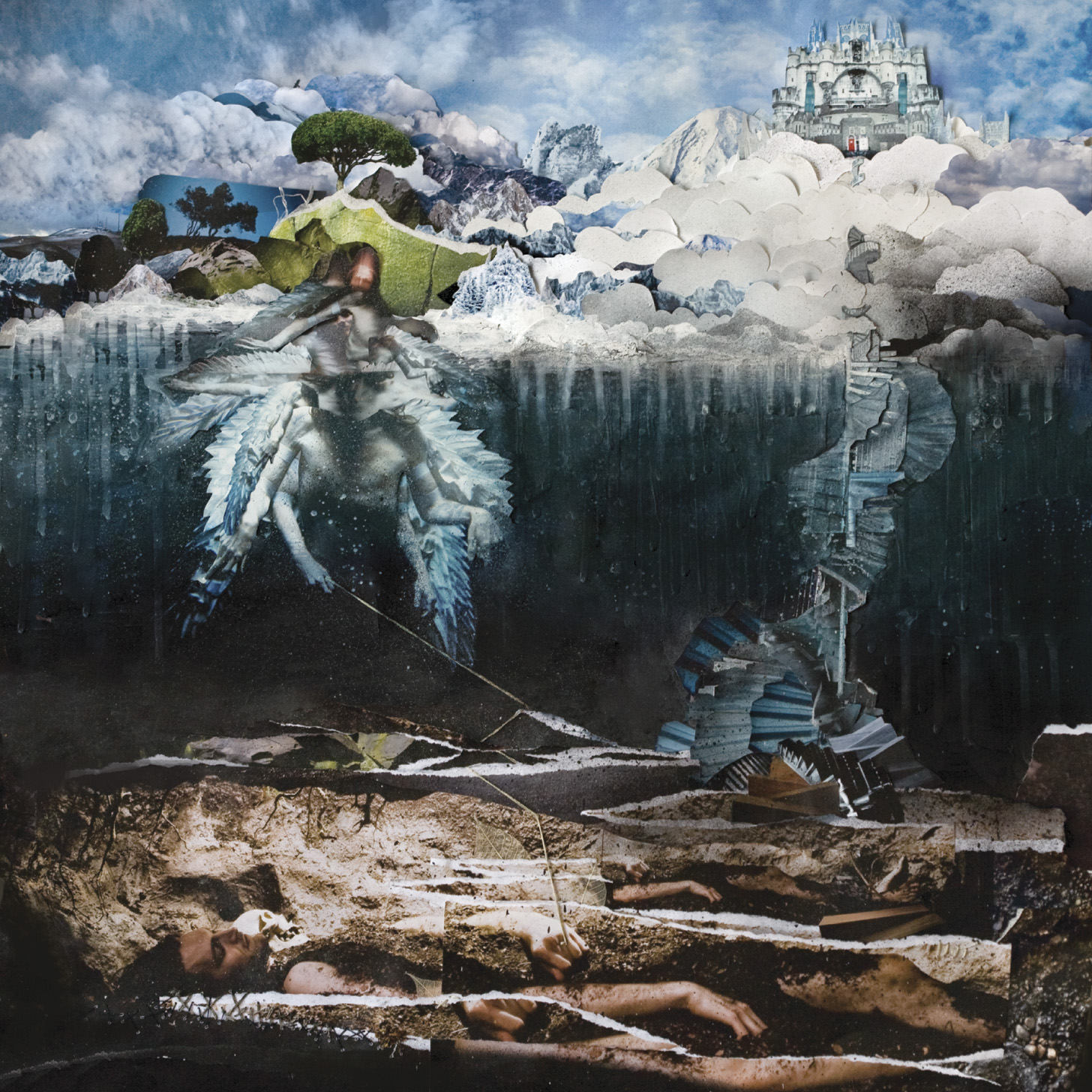
The album art (featured above) seems to be another reference to, not only River’s death, but also this future prophecy. A multi-faced Frusciante stands with wings, submerged in water with a waterfall in the backdrop. A wrecked boat sits on the bottom of the ocean and a deceased young man grasps a lifeline that leads up through the boat into Frusciante’s hand. A skull is placed next to the young man signifying the dying god.
 The Apple and the birdcage